SEO and GEO in 2026: how to rank on Google and get named in AI answers
AI answers sit on top of Google and inside every assistant, and all of them are built from pages search engines can read. Be the page the answer is built from.
In short
- Google needs no special files or markup for AI Overviews or AI Mode. The pages that rank are the pages its AI features draw on.
- Each AI assistant reads your site with its own crawler, and robots.txt controls each one separately. Blocking a training bot is a separate choice from blocking a search bot.
- Answer the question in the first two sentences, then prove it: a sourced number, a named voice, first-hand evidence.
- GEO is mostly good SEO plus proof. Skip llms.txt and fixed answer lengths: the evidence does not support them.
- Track AI mentions with a monthly panel of 20 prompts, and judge trends over months, not single answers.
Written from the SEO + GEO Playbook 2026 (Edition 01, September 2026). Every tactic below is graded by the evidence behind it.
How search and AI answers work
AI answers now sit on top of Google Search and inside the assistants people use. All of them are built from pages that search engines can read.
- Step 1 · Crawl and indexCan they read you?Googlebot, OAI-SearchBot, PerplexityBot and Claude-SearchBot fetch your pages. robots.txt decides for each bot separately.
- Step 2 · RetrieveWhich pages fit?Google runs several related searches across subtopics, called query fan-out, and collects supporting pages.
- Step 3 · AnswerWho gets named?The answer cites or links a handful of sources. Pages that are not used get nothing.
| Where the answer appears | Reads your pages with | What its owner says |
|---|---|---|
| Google AI Overviews and AI Mode | Googlebot and Google's index | Same rules as Search: indexed and allowed to show a snippet |
| ChatGPT search | OAI-SearchBot | Block it and you are left out of ChatGPT's search answers |
| Perplexity | PerplexityBot | Links sites in its answers and respects robots.txt |
| Claude | Claude-SearchBot | Blocking it may reduce your visibility in Claude's answers |
Google ran two core updates in 2026 by the end of September, starting 27 March and 21 May, each taking 12 days, plus spam updates in March, June, August and September. Check the Search Status Dashboard dates before you react to a drop.
Strategy 1: technical health in an afternoon
If a search engine cannot crawl, index and quote a page, no ranking and no AI answer can use it.
- Indexing. Search Console › Pages shows what is indexed and why other pages are not. Fix your key pages first.
- Snippets. A page marked noindex, nosnippet or with a tight max-snippet cannot be quoted in AI Overviews. Check it is on purpose.
- Crawlers. robots.txt decides bot by bot. Blocking a training bot is a separate choice from blocking a search bot.
- Internal links. Every important page is linked from related pages with descriptive words, a few clicks from the home page.
- Page experience. Core Web Vitals on real visits: LCP within 2.5 s, INP within 200 ms, CLS below 0.1.
- Structured data. It must match the visible text. It helps Google understand a page; no study shows it raises AI citations.
| Bot | Its job | If you block it |
|---|---|---|
| Googlebot | Google Search, AI Overviews, AI Mode | You leave Google Search |
| Google-Extended | Gemini training and grounding in Gemini apps | Search is unaffected |
| OAI-SearchBot | ChatGPT search answers | You drop out of them |
| GPTBot | OpenAI model training | Search is unaffected |
| PerplexityBot | Perplexity answers | You drop out of them |
| Claude-SearchBot | Claude's search answers | Visibility in Claude may fall |
| ClaudeBot | Anthropic model training | Future pages leave training |
User-agent: OAI-SearchBot
Allow: /

User-agent: PerplexityBot
Allow: /

User-agent: Claude-SearchBot
Allow: /

User-agent: GPTBot
Disallow: /

User-agent: ClaudeBot
Disallow: /
OpenAI says robots.txt changes take about 24 hours to apply. User-triggered fetchers such as ChatGPT-User and Perplexity-User may not follow robots.txt.
Strategy 2: content that ranks and gets used
Google rewards pages made to help people. AI answers draw on pages that answer clearly and cover the whole question.
Google's own test is who, how and why. Who made it: an author with real experience in the topic. How it was made: how you tested or sourced it, and where AI helped if readers would expect to know. Why it exists: to help people, not to rank.
- Plan the fan-out. List the questions around a topic: basics, costs, comparisons, problems. One page per real question.
- Answer first. Open with two sentences that answer the question. Then give the detail, the steps and the proof.
- Update for real. Add new facts and examples. AI assistants tend to cite fresher pages. Never change only the date.
- Use AI with care. AI drafting is allowed. Mass-producing pages that add nothing can count as scaled content abuse, a spam policy.
Before
"In today's fast-paced world, choosing running shoes can feel overwhelming. In this article we will explore everything you need to know about finding the perfect pair..."
After
"For flat feet, choose a stability shoe with a firm midsole and a wide base. We tested 12 pairs with 40 runners over six weeks; these five cut inward roll the most."
The same page opening, before and after, for a fictional brand. E-E-A-T is not a score, there is no 2,500-word rule, and Google does not penalise AI-written text that helps people.
Strategy 3: proof of expertise
Sourced numbers, named voices and first-hand evidence make a page easier to trust, and in one lab study, easier for AI answers to use.
The researchers rewrote pages and measured how much of a generative engine's answer drew on them. The caveats: 2023-era models, and it measures a share of the answer text, not clicks. Results varied by topic.
- A number with its source. Your own data first: tests, orders, survey results. Otherwise a primary source, linked.
- A named voice. Quote an expert or a customer by name and role, with permission.
- First-hand evidence. Photos you took, results you measured, a method you can show. What only you can publish.
| Signal | Link with AI Overview visibility |
|---|---|
| Mentions on other sites | 0.664 |
| Domain Rating | 0.326 |
| Backlinks | 0.218 |
That Ahrefs correlation (75,000 brands, May 2025) suggests mentions matter more than links, but a correlation is not proof. Earn mentions the honest way: be quoted in your category's roundups and comparisons, publish data others cite, and collect reviews on sites people trust.
Strategy 4: local search
Google ranks local results on relevance, distance and prominence. You control two of the three.
- Verify the profile. An unverified Business Profile cannot be fully managed.
- Fill every field. Category, services, hours (holiday hours too), attributes and, for shops, products.
- Add photos and videos. Real photos of the place, the team and the work, refreshed as things change.
- Ask for reviews, reply to all. Ask every happy customer. Reply to every review, good or bad, specifically.
"Post every week or you drop" and "thirty days without activity hurts your rank" appear nowhere on Google's ranking page. What moves prominence: more genuine reviews, a good rating, replies that show you listen, and mentions from local sites and press.
Strategy 5: GEO, get named in AI answers
Generative engine optimisation is mostly good SEO plus proof. Spend effort only where there is evidence.
| Tactic | Evidence | Verdict |
|---|---|---|
| Indexable, allowed a snippet | Google's documented requirement for AI features | Do it |
| Let AI search crawlers in | OpenAI, Perplexity and Anthropic crawler pages | Do it |
| Sourced statistics, quotes, citations | Peer-reviewed lab study (KDD 2024) | Do it |
| Earn mentions on other sites | Vendor correlation, 75,000 brands | Worth doing |
| Update pages in substance | Vendor correlation, 17 million citations | Worth doing |
| Add schema for AI citations | Controlled vendor test: no clear lift | Keep accurate only |
| Publish an llms.txt file | 97% of files got no requests; Google: not needed | Skip |
| Fixed answer lengths ("40 to 60 words") | No method found behind the rule | Skip |
The anatomy of a page AI answers can use
- The question as the heading, in the words people use, not a slogan.
- A two-sentence answer, before any story or context.
- A proof block: a sourced number, a named quote, a primary link.
- The detail, by subtopic: one section per follow-up question from the fan-out.
- Who, how and why: the author, the method, and the date of the last real update.
Four myths to answer when someone sends them: "rank first in Bing and ChatGPT will cite you" (no OpenAI page explains how ChatGPT picks sources), "block Google-Extended to leave AI Overviews" (it does not), "post on Reddit and AI will cite you" (studies show Reddit is cited often, not that posting gets you cited), and "this tracker gives your exact AI rank" (trackers sample prompts, and answers change by person, place and day).
Strategy 6: measure rankings and AI mentions
| Report | Shows | Watch out |
|---|---|---|
| Search Console · Performance | Clicks, impressions, CTR, position, with AI Overviews and AI Mode counted inside Web | You cannot separate AI features here |
| Search Console · Generative AI | Impressions in AI Overviews and AI Mode, by page, country, device and date | Impressions only: no clicks, no queries |
| GA4 · AI Assistant channel | Visits from AI assistants on Google's list: ChatGPT, Gemini, Deepseek, Copilot, Grok | Perplexity and Claude are not named |
| Bing Webmaster · AI Performance | Citations in Copilot, Bing and partner AI answers | Still in preview |
The monthly AI panel
- Fix 20 prompts: the questions customers ask before buying, general, comparison, local and your brand by name.
- Run them the same way in ChatGPT, Gemini, Perplexity and Claude, from the same place and account type each month.
- Score and compare: mentioned, cited with a link, competitors named. Track the rates month by month, not single answers.
In a randomised study of 1,065 US desktop users, organic clicks fell 39.8% when an AI Overview appeared. Judge pages on impressions, AI mentions and conversions too, not clicks alone.
Run it with Claude
Claude reads your search numbers through connectors, and none of these can edit your website: Windsor.ai (Search Console and GA4, in Claude's directory), Semrush and Ahrefs (their own official connectors, which need paid plans), and Google's experimental Analytics MCP server for Claude Code. Google has not published a Search Console MCP server; read the code of any community server before you connect one.
Rewrite <URL> so people and AI systems can use it. Read it first. Keep
our facts; improve how they are shown.
1. Open with a two-sentence answer to the page's main question.
2. Add proof where we have it: a statistic with its source, a quote
   from a named expert or customer, a link to the primary source.
   Where I must supply the real number, write <NEED DATA>.
3. Add who, how and why: who wrote it and why they know, how we tested
   or sourced it, and the date of the last real update.
4. Keep only claims we can prove.
Show the new version, then a list of what changed and why.
The PDF has the rest: a site health audit, a topic plan for the whole fan-out, titles from real queries, an internal links plan, a local profile audit, the monthly AI visibility panel, a robots.txt check, a monthly report and a content refresh list.
Your first 90 days
- Month 1 · fix what blocks you. Run the audit and the crawler check, fix indexing on key pages, complete the Business Profile and connect Claude.
- Month 2 · improve what ranks. Rewrite your five most valuable pages answer-first with proof, and write new titles for low-CTR pages.
- Month 3 · grow what is missing. Plan the fan-out, write the missing pages, start the AI panel and add internal links.
Questions people ask
Do I need an llms.txt file to appear in AI answers?
No. Google says you do not need new machine-readable files or markup to appear in AI Overviews or AI Mode, and in an Ahrefs study of 137,210 domains (June 2026), 97% of llms.txt files received no requests.
Does blocking Google-Extended remove my site from AI Overviews?
No. Google-Extended controls Gemini training and grounding in Gemini apps. AI Overviews and AI Mode use Googlebot and Google's index. To limit what they can show, use nosnippet, data-nosnippet or max-snippet.
What is GEO?
Generative engine optimisation: making pages that AI answers can find, trust and quote. In practice it is good SEO plus proof. The one peer-reviewed study found sourced statistics, quotations and citations raised visibility in generative answers by 30 to 41%.
How do I measure whether AI assistants mention my brand?
Run the same 20 customer questions in ChatGPT, Gemini, Perplexity and Claude each month, from the same place and account type, and score mentions, linked citations and competitors named. Search Console's Generative AI report and GA4's AI Assistant channel add the rest.
Can I pay for a better Google Maps ranking?
No. Google states there is no way to request or pay for a better local ranking. Relevance, distance and prominence decide it, and you control relevance and prominence.
Sources
- Google Search Central: AI features and your website (updated 10 December 2025); Creating helpful, reliable, people-first content; Using generative AI content; Google's common crawlers (updated 14 July 2026)
- Google Search Status Dashboard, 2026 ranking updates (read 30 September 2026)
- OpenAI, Perplexity and Anthropic crawler documentation (read 30 September 2026)
- Aggarwal et al., GEO: Generative Engine Optimization, KDD 2024 (arXiv 2311.09735)
- Ahrefs studies: brand mentions and AI Overviews, 75,000 brands (May 2025); freshness, 17 million AI citations (July 2025); schema (May 2026); llms.txt across 137,210 domains (June 2026). Vendor data.
- Profound: AI platform citation patterns, 680 million citations (2025). Vendor data.
- Search Console Help: Generative AI performance report; GA4 Help: default channel group; Bing Webmaster Blog (16 June 2026); Google Business Profile Help: Tips to improve your local ranking
Facts checked on 30 September 2026. Platforms change often: check the date on any setting before you rely on it.
Keep it
Download the SEO + GEO Playbook
Six strategies, the crawler table, the evidence table for every GEO tactic, the Claude setup and eleven prompts, laid out for printing.
Download the PDFRather have us run it?
Start with a free sample ad
We make and run Meta ads, content and websites for food and consumer brands. For PLB Snacks: 3.16x return on Meta ads, April to October 2025.
Written by
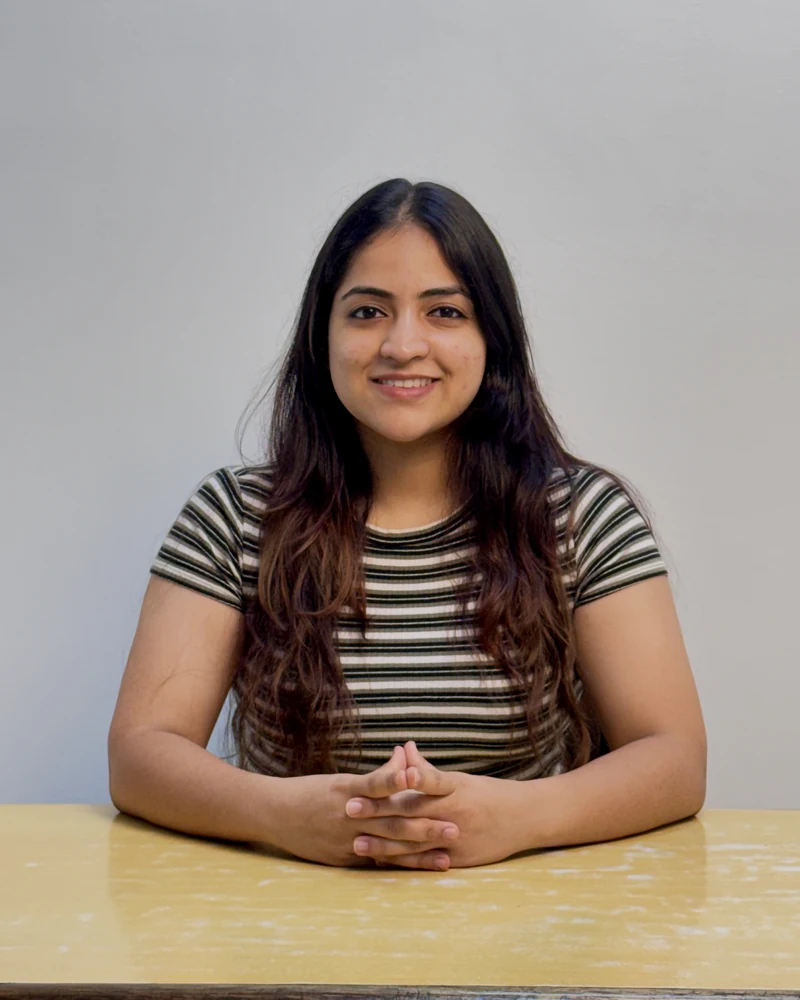
Anisha Dogra
Anisha runs performance marketing and AI systems for brands at RAAY Creative, the AI Lab and marketing studio she co-founded in New Delhi. She writes these guides from the work the studio does every week, and checks every fact against its source before it goes up.
Talk to us about this